
Play Jackpot Bells Now!
Home → Demo
Jackpot Bells Demo
What the Jackpot Bells demo gives you
The Playtech slot Jackpot Bells operates with a 96.03% theoretical return rate, establishing a 3.97% house edge over extended play sessions. This mathematical framework defines the long-term expected payout percentage for all wagers placed on the five-reel grid structure. Players observing this metric gain insight into the game's volatility profile without risking personal funds during the simulation phase.
Maximum win potential reaches 37,500x the stake amount, offering substantial reward caps compared to standard fruit-machine mechanics. The medium volatility rating suggests balanced risk distribution across spins rather than extreme variance patterns typical of high-risk titles. Such structural parameters allow analysts to evaluate payout frequency expectations before transitioning to real-money betting environments and strategies.
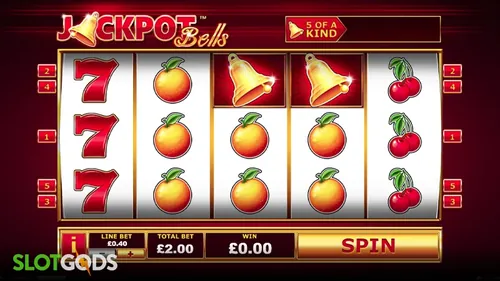
Starting the demo without registration
Accessing the Playtech title requires no account creation or identity verification processes, enabling immediate gameplay initiation via browser interface. Users can engage with the 5x3 reel layout instantly, bypassing traditional casino registration hurdles that typically delay gaming session starts significantly. This frictionless entry point supports rapid testing of the 5-payline system under controlled conditions without administrative overhead or data submission requirements.
Demo balance and bet sizes
Virtual credits in the demo environment simulate wagering between 2.00 and 25.00 per spin, mirroring actual cash game constraints precisely. These limits align with the Triple Money Jackpot Bells variant configurations available in live markets, ensuring consistent parameter testing across modes. Players adjusting stakes within this range observe how bet size influences hit frequency relative to the fixed 5-payline winning combinations structure.
What carries over to real money
Game mechanics including the progressive jackpot trigger and wheel-triggered features remain identical whether played with virtual or real currency balances. The 96.03% RTP value persists unchanged across both modes, maintaining the same 3.97% house edge expectation for statistical analysis purposes. Players transferring to real money retain familiarity with symbol payouts while encountering genuine financial risk and regulatory compliance requirements immediately upon deposit.
Browser requirements for the demo
Modern web browsers support the Playtech HTML5 implementation without requiring additional plugins or software downloads for optimal Jackpot Bells performance. Standard internet connectivity suffices to load the 5x3 grid interface, ensuring stable operation regardless of device type or operating system version used. Technical specifications focus solely on rendering capabilities rather than hardware acceleration demands, keeping resource consumption minimal during extended analytical observation periods.
Jackpot Bells: key facts
| Parameter | Value |
|---|---|
| Game | Jackpot Bells |
| Studio | Playtech |
| RTP | 96.03% |
| House edge | 3.97% |
| Volatility | medium |
| Max win | 37,500x |
| Reels | 5x3 |
| Paylines / ways | 5 |
| Bet range | 2.00 – 25.00 |
Reading the paytable in demo mode
The Jackpot Bells slot by Playtech displays a standard 5x3 reel layout with exactly five fixed paylines. This configuration defines the maximum possible winning combinations per spin as limited to those five lines rather than a higher count of ways. Players observing the paytable must account for this narrow structure when evaluating symbol frequency and payout potential across the grid.
The theoretical Return to Player (RTP) stands at 96.03%, establishing a house edge of 3.97% over extended play sessions. This percentage is lower than the 96.75% RTP found in Wild Bounty Showdown by PG Soft, indicating a slightly higher cost per unit wagered compared to that title. The figure represents a long-run statistical average rather than a guarantee for individual spins or short-term sessions.
Testing bet levels safely
Staking on Jackpot Bells ranges from a minimum of 2.00 € up to a maximum stake of 25.00 € per spin. This betting window allows for controlled bankroll management without requiring extreme high-roller limits often seen in other video slots. The upper limit caps the maximum potential loss per round at 25.00 € multiplied by the relevant multiplier values.
How many rounds make a fair test
A medium volatility setting in Jackpot Bells suggests that wins occur with moderate frequency but lack the extreme peaks of high-variance titles. This behavior contrasts with the high volatility of Zeus vs Hades by Pragmatic Play, which produces fewer but larger payouts over similar sample sizes. Analysts recommend tracking at least several hundred spins to observe how the 96.03% RTP stabilizes around its theoretical mean.
Session length and pacing
The game features classic fruit-machine symbols and a progressive jackpot mechanic that triggers through specific bonus conditions. This design pace differs significantly from the scatter-based mechanics of Sweet Bonanza Super Scatter by Pragmatic Play, which relies on cluster pays rather than traditional line wins. The presence of these legacy elements influences the expected duration of a standard playing session compared to modern video slots.
Common mistakes in free play
Players often confuse the Triple Money Jackpot Bells variant, which has an RTP of 95.42%, with the standard version offering 96.03%. This discrepancy creates a higher house edge of 4.58% for the variant compared to the 3.97% edge in the main game. Misidentifying the specific version leads to inaccurate expectations regarding long-term return rates and volatility profiles.
Demo versus real money differences
The theoretical return to player for Jackpot Bells stands at 96.03%, a figure derived from Playtech’s long-term mathematical models over millions of spins. This percentage represents the average payout structure rather than a guarantee for any single session or limited play period. Players observing the demo mode will notice that the volatility remains medium, meaning wins occur with moderate frequency and size compared to high-variance alternatives. The house edge calculates to exactly 3.97% based on this RTP value, establishing the casino's mathematical advantage in every transaction.
Real-money play introduces the same 96.03% RTP but adds financial stakes ranging from 2.00 to 25.00 per spin, which directly impacts bankroll management strategies. In contrast, the Triple Money Jackpot Bells variant circulates with a slightly lower RTP of 95.42%, creating a distinct mathematical profile for players seeking progressive features. This difference of 0.61% alters the expected loss rate over extended sessions, requiring players to adjust their bet sizes accordingly to maintain similar risk levels. The reel layout remains consistent across both versions, preserving the classic 5x3 grid structure regardless of the underlying return percentage.
Maximum win potential defines the upper limit of profitability, with Jackpot Bells capping at 37,500x the total stake amount during standard gameplay sequences. This ceiling applies equally to demo environments and cash accounts, ensuring that the visual presentation of big wins remains identical in both modes. However, the financial consequence differs significantly, as demo credits carry no monetary value while real currency allows for actual withdrawals upon meeting wagering conditions. The five paylines operate independently of the currency type, ensuring that symbol combinations trigger payouts according to the same fixed paytable values.
Why results vary between sessions
Volatility classification determines the distribution pattern of payouts, with Jackpot Bells rated as medium by Playtech to balance risk and reward frequencies. Medium volatility implies that players can expect smaller wins more often than in high-variance games, yet still encounter dry spells without major jackpots. This statistical behavior ensures that the 96.03% RTP is achieved through thousands of spins rather than a few large payouts. Consequently, short-term sessions may deviate significantly from the theoretical return due to the random number generator's inherent unpredictability.
The maximum win cap of 37,500x serves as a hard limit on potential earnings, preventing infinite growth even during favorable streaks of matching symbols. This constraint interacts with the medium volatility setting to create a specific risk profile where large wins are rare but substantial when they occur. Comparing this to Le King by Hacksaw Gaming reveals a lower cap of 20,000x despite similar volatility, highlighting how studio design choices affect payout structures. Such variations explain why two games with identical RTPs can produce vastly different experiences during individual playing sessions.
RTP percentages like 96.03% function as long-run averages over hundreds of thousands of spins, not as predictors for immediate session outcomes. A single hour of play might yield returns far above or below this figure due to the law of large numbers requiring extensive data sets. For instance, hitting the progressive jackpot triggers a massive payout that temporarily skews the session result upward by thousands of percent. Understanding this statistical reality helps players manage expectations regarding variance and prevents misinterpretation of short-term losses as system failures.
Using demo to learn the bonus round
Jackpot Bells features a progressive jackpot mechanism triggered through specific symbol alignments on its five-reel, three-row grid interface. The demo mode allows players to observe these triggers without risking funds from their 2.00 to 25.00 betting range limits. By watching the wheel-triggered jackpot sequence in the Triple Money variant, users can understand the visual cues indicating imminent bonus activation. This observational learning phase is crucial for recognizing patterns in symbol placement that precede the special game events.
The classical fruit-machine symbols displayed on the reels follow standard Paytech conventions, ensuring familiarity for players transitioning from physical slot machines. These traditional icons interact with the modern progressive jackpot system, blending retro aesthetics with contemporary RNG technology. Observing the demo reveals how wild symbols substitute for other icons to complete winning combinations across the five active paylines. This mechanical understanding helps players appreciate the complexity behind the seemingly simple 96.03% return calculation.
Wagering requirements associated with the 300% welcome bonus up to €2,000 must be met before withdrawing any winnings generated from free spins or deposit matches. While demo play does not contribute to these turnover obligations, it provides valuable insight into the game mechanics affecting bonus eligibility. Players should note that the 3.97% house edge applies equally to bonus funds and real deposits once converted. Familiarity with the spin speed and bet adjustments in demo mode streamlines the transition to real-money compliance with casino terms.
Switching from demo to cash play
The transition from virtual credits to real currency requires selecting a stake within the defined 2.00 to 25.00 range for each spin cycle. This financial commitment activates the full regulatory protections and payout guarantees associated with licensed online gambling operations. Players must ensure their account verification is complete to facilitate smooth transactions when claiming the 37,500x maximum win potential. The technical performance of the 5x3 grid remains unchanged, maintaining visual fidelity across both play modes.
Payment processing times vary depending on the chosen method, but most operators aim to credit deposits instantly for immediate gameplay access. Withdrawal requests for winnings exceeding the initial deposit typically undergo security checks before funds are released to the player's account. The 96.03% RTP ensures that the mathematical expectation remains constant regardless of the funding source used to initiate spins. Understanding these logistical steps helps players plan their bankroll management around the 3.97% house edge effectively.
Bonus terms including the 300% match up to €2,000 require careful attention to wagering multipliers that dictate how many times deposited funds must be cycled. These conditions apply strictly to real-money balances and do not influence the outcome probabilities of the underlying slot mechanics. Players switching from demo should verify that their selected bet size complies with contribution rates toward these turnover requirements. Failure to adhere to these rules may result in forfeiture of bonuses and associated winnings, emphasizing the importance of reading terms thoroughly.
When the demo is worth your time
Evaluating the medium volatility of Jackpot Bells through extended demo sessions helps players gauge their tolerance for variance before committing real funds. The 96.03% RTP suggests fair long-term returns, but short-term fluctuations can test patience during dry spells without significant payouts. Observing the progression toward the 37,500x max win cap allows users to assess whether the risk-reward ratio aligns with their personal strategy. This analytical approach minimizes impulsive decisions driven by temporary winning streaks observed in brief trials.
Comparing Jackpot Bells against titles like Sizzling Hot by Novomatic, which offers a 95.66% RTP and 5,000x max win, highlights differences in payout structures. The higher volatility of Lord of the Ocean by Greentube contrasts sharply with Jackpot Bells' balanced approach, appealing to different player segments. Demo modes enable direct comparison of these mathematical profiles without financial exposure, allowing informed selection based on preferred risk levels. Such comparisons reveal how studio-specific designs impact the overall gaming experience beyond mere visual themes.
The triple money jackpot variant's wheel-triggered feature provides an additional layer of engagement absent in standard jackpot implementations. Testing this mechanic in demo mode clarifies the probability distribution of landing on high-value segments versus common ones. Players can calculate the effective house edge by tracking hit frequencies against theoretical expectations over hundreds of spins. This empirical validation of the 3.97% margin builds confidence in the game's fairness before engaging with real monetary stakes.
DemoRTP & VolatilitySymbols & PayoutsBonus FeaturesStrategyBonusesMobileDownload & AppMax WinSimilar GamesReviewFAQSitemap
Jackpot Bells 2026